Introduction
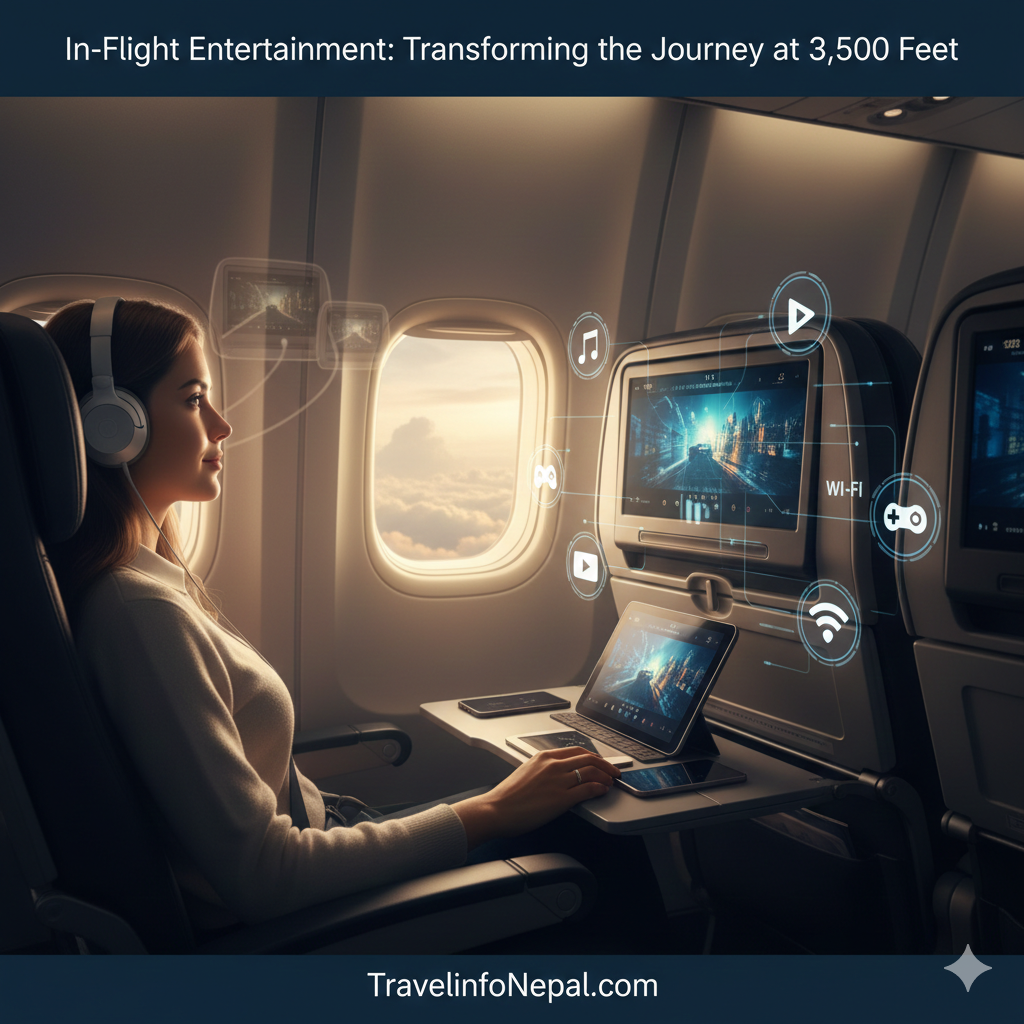
Flying is no longer just about reaching your destination—it’s about the journey itself. In-flight entertainment (IFE) has transformed from simple overhead screens to personalized, high-tech experiences. Airlines are now competing to deliver cinema-quality movies, curated playlists, interactive games, and even live streaming at 35,000 feet.
A Brief History
- 1980s–1990s: Overhead projectors and shared screens dominated.
- 2000s: Seatback screens became standard, offering movies and TV shows.
- 2010s: Touchscreens, USB charging, and Wi-Fi connectivity entered the cabin.
- 2020s–2025: Airlines began integrating 4K displays, Bluetooth pairing, and AI-driven content recommendations.
Current Innovations
Modern IFE systems are designed to rival home entertainment setups:
- Content Variety: Thousands of movies, TV shows, podcasts, and curated music playlists. Some airlines even offer live sports and news channels.
- Screen Size: Economy cabins now feature 13–15 inch HD touchscreens, while business and first class boast 18–32 inch 4K displays.
- Connectivity: Passengers can pair personal devices via Bluetooth, stream content, or use airline apps for second-screen experiences.
- Personalization: AI-driven systems suggest movies or music based on passenger preferences.
- Records: Emirates and Singapore Airlines are often cited as leaders, offering the largest content libraries—over 4,000 entertainment options.
Cabin Class Comparisons
- Economy Class: Seatback screens with HD resolution, USB charging, and curated playlists.
- Premium Economy: Larger screens, noise-canceling headphones, and expanded content libraries.
- Business Class: 18–24 inch 4K displays, personalized content, live TV, and device pairing.
- First Class: 32-inch cinema-style screens, surround sound, and even VR headsets on select airlines.
Fun fact: Some airlines now allow passengers to order meals, shop duty-free, and even control seat functions directly from the entertainment screen.
Effectiveness and Passenger Experience
IFE systems are more than entertainment—they reduce travel fatigue, improve passenger satisfaction, and even influence airline loyalty. Studies show passengers are more likely to rebook with airlines offering superior entertainment and connectivity.
Future Predictions
- Immersive Tech: Virtual reality (VR) and augmented reality (AR) experiences.
- Smart Integration: AI-driven personalization, syncing with passenger devices and travel apps.
- Streaming Partnerships: Collaborations with Netflix, Spotify, and gaming platforms.
- Eco-Friendly Systems: Lightweight, energy-efficient screens to reduce aircraft fuel consumption.
- Cabin-Wide Connectivity: 5G-enabled aircraft offering seamless internet and cloud-based entertainment.
Conclusion
In-flight entertainment has evolved from grainy overhead screens to personalized, immersive experiences. Airlines are racing to deliver bigger screens, smarter systems, and richer content libraries. The future promises even more innovation, making the journey as enjoyable as the destination.
From 4K seatback screens to AI-driven playlists, discover how in-flight entertainment is evolving and what the future holds for passengers worldwide.