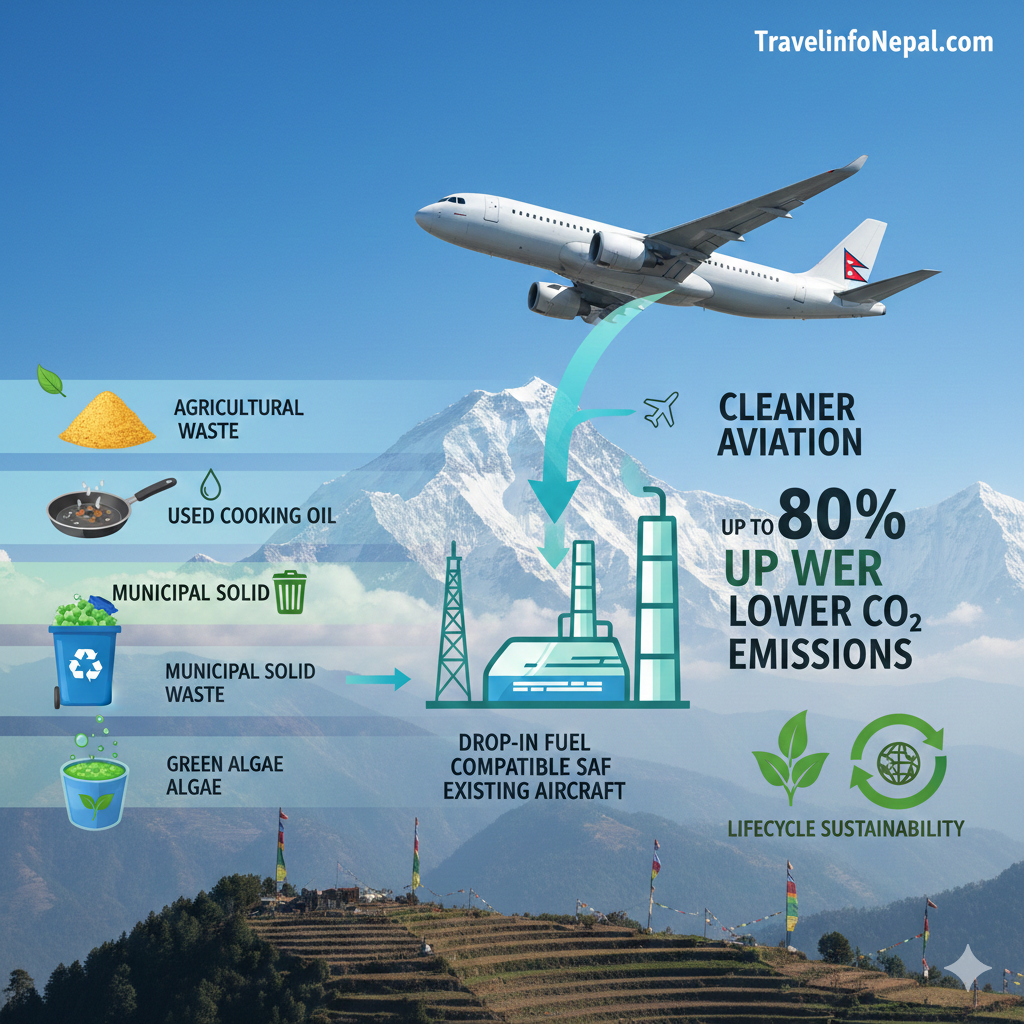
What is SAF?
Sustainable Aviation Fuel (SAF) is an eco-friendly alternative to traditional jet fuel. It is produced from renewable sources such as agricultural waste, used cooking oil, municipal solid waste, or even algae. Unlike fossil fuels, SAF can reduce lifecycle carbon emissions by up to 80% while being fully compatible with existing aircraft engines and airport infrastructure. This makes it one of the most practical solutions for decarbonizing aviation.
A Brief History
- 2000s: Early experiments with biofuels derived from plant oils began.
- 2010s: Airlines like KLM and United Airlines successfully operated commercial flights using SAF blends.
- 2020s: SAF gained global momentum as ICAO and IATA linked it to aviation’s net-zero 2050 targets. Governments and airlines worldwide started investing heavily in SAF production.
Current Scenario
- SAF is already in use in Europe, North America, and parts of Asia.
- Production costs remain 2–4 times higher than fossil jet fuel, limiting widespread adoption.
- International aviation bodies aim for SAF to contribute significantly to emission reductions by 2030.
- Airlines are partnering with energy companies to scale production, but supply is still limited compared to demand.
Future Predictions
- By 2030: SAF could make up 10–15% of global aviation fuel if subsidies and technology scale up.
- By 2050: SAF is expected to play a central role in aviation’s carbon-neutral journey, alongside electric and hydrogen-powered aircraft.
- Innovation: Synthetic fuels made from captured CO₂ may further revolutionize the industry.
Environmental Impact
Positive Effects:
- Up to 80% reduction in lifecycle CO₂ emissions.
- Promotes circular economy by using waste materials.
- Reduces dependence on fossil fuels.
Negative Effects:
- Land-use concerns if crops are diverted for fuel production.
- Energy-intensive production processes.
- Limited availability may slow global impact.
What It Means for Nepal
Nepal’s aviation sector is vital for tourism, trade, and connectivity. SAF adoption could bring both opportunities and challenges:
Opportunities:
- Strengthen Nepal’s eco-tourism branding by showcasing commitment to sustainability.
- Potential to produce SAF locally from agricultural residues and waste, creating jobs and reducing fuel imports.
- Align Nepal’s aviation industry with global climate commitments.
Challenges:
- High costs may burden airlines operating in Nepal’s competitive market.
- Lack of infrastructure for SAF production and distribution.
- Policy support and international partnerships will be crucial to make SAF viable in Nepal.
Final Thought
SAF is not a magic solution, but it is a critical step toward greener skies. For Nepal, embracing SAF could enhance its tourism appeal, reduce dependency on fossil fuels, and contribute to global sustainability goals—provided the right investments, policies, and partnerships are in place.
Sustainable Aviation Fuel (SAF) is reshaping the future of aviation. Learn how this eco-friendly fuel could impact Nepal’s tourism, economy, and environment.